Fix the sewer without losing the yard. Cured-in-place lining and pipe bursting rebuild failed sewer lines through small access points — no open trench across your lawn, driveway or landscaping. Call 973-355-0890.
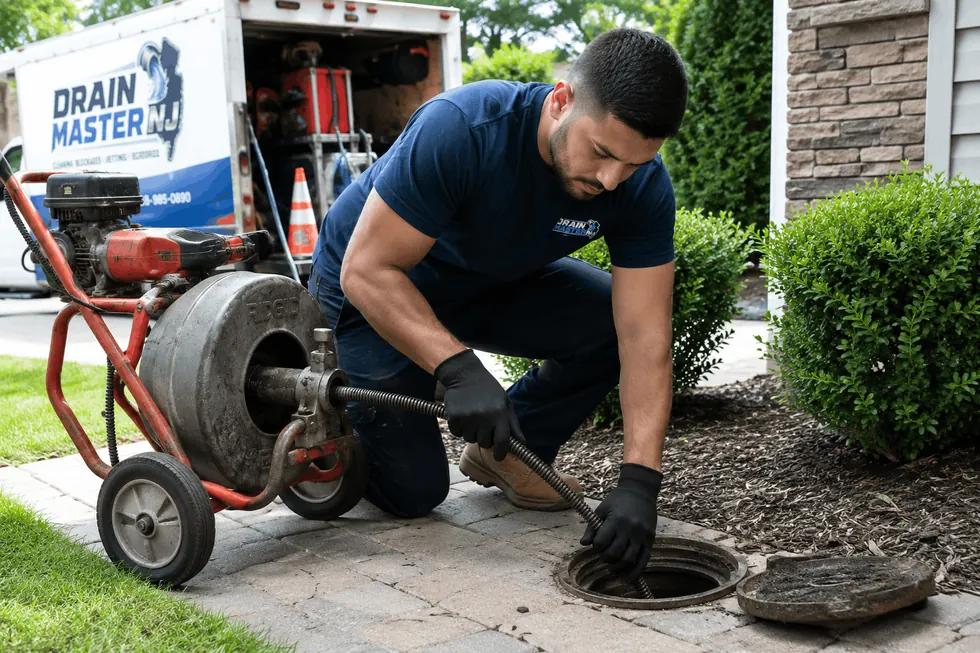
Traditional sewer repair opens a trench along the pipe's entire path — through lawn, garden beds, walkways, sometimes a driveway. Trenchless methods repair or replace the pipe from the inside, working through existing cleanouts or one or two small pits. The result is the same structurally sound line, with days less labor, no ruined hardscape, and restoration costs near zero. For properties where the lateral runs under anything you'd hate to demolish, trenchless usually wins the total-cost comparison even when its sticker price is higher.
A resin-saturated felt liner is inverted or pulled into the cleaned host pipe, inflated against the walls, and cured into a hard, jointless new pipe inside the old one. CIPP handles cracks, root-damaged joints, minor offsets and corrosion beautifully — the seamless liner gives roots nothing to enter and waste nothing to snag on. The line must be prepared first, which is why lining jobs begin with hydro jetting and descaling to bare pipe wall, verified on camera. Diameter loss is minimal and flow typically improves thanks to the glass-smooth interior. Most residential linings cure and return to service the same day.
When the old pipe is too far gone to host a liner — collapsed sections, severe ovality, fully channeled cast iron — pipe bursting replaces it along the same path. A conical bursting head is pulled through the old line, fracturing it outward into the surrounding soil while dragging new HDPE or PVC pipe in behind it. Two access pits, one day of work, and you have a brand-new full-diameter pipe where the failed one was. Bursting can even upsize the line where code requires more capacity.
Honesty first: trenchless has limits. A fully collapsed line with no path for the camera can't be lined or burst without first excavating the collapse. Significant bellies remain bellies after lining — the liner follows the host pipe's shape, low spot included. Lines with multiple tight-radius bends or failing connections at the main sometimes need hybrid approaches: dig the problem point, line the rest. Our camera survey determines candidacy before anyone quotes anything, and if open-trench replacement is genuinely your better deal, that's the quote we'll push.
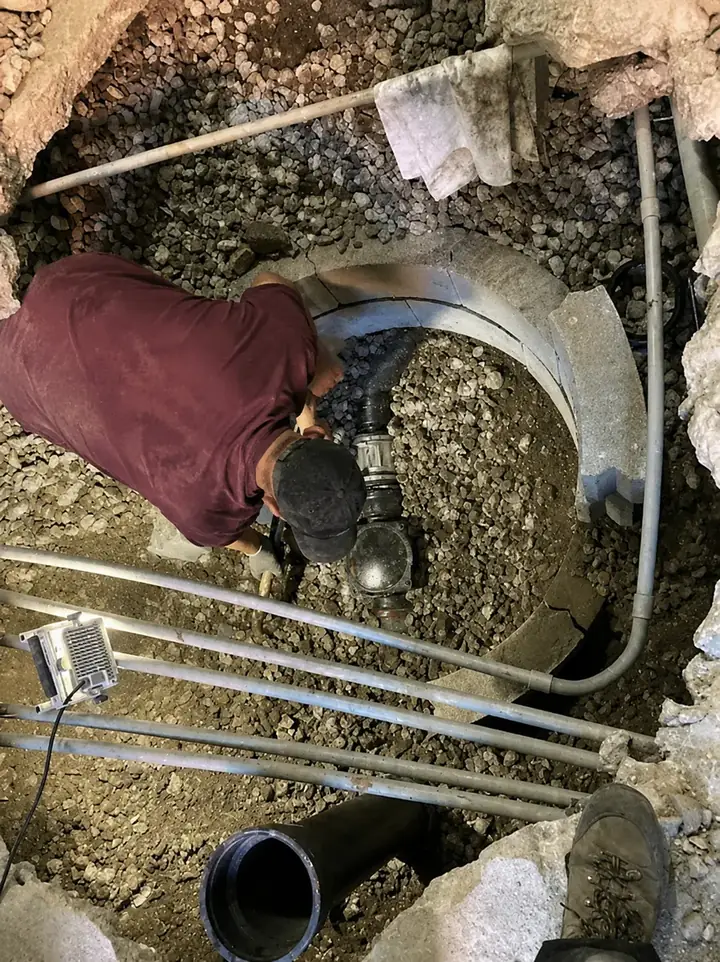
1) Camera survey and locating map every defect, bend and connection. 2) The line is jetted and descaled to clean host pipe, re-verified on video. 3) Lining or bursting is performed through cleanouts or compact pits. 4) A post-work camera pass records the finished pipe — footage you keep. 5) Any service connections are reinstated and the site is restored. Most projects run one to two days, and your water is typically only off for hours, not days.
Cured liners and HDPE burst pipe are both engineered for a 50-year design life, backed by our workmanship warranty. Compare the full picture when weighing bids: trenchless vs. trench isn't just pipe cost — it's also the driveway you don't repour, the mature maple you don't lose, the three days of excavation your yard doesn't endure, and the resale value of a documented, camera-verified new sewer. We'll put both numbers in front of you and let the math talk.
From tight urban lots in Hudson County where excavation is barely possible, to shore properties in Monmouth and Ocean where laterals run under paver patios, to wooded Sussex and Hunterdon lots where trees own the yard — trenchless technology was made for New Jersey's property realities. Wherever you are in the state, the evaluation starts with one camera visit.
Trenchless bids confuse homeowners because the per-foot rate reads higher than open-trench pipe — and stops mattering the moment you price the whole project. Open-trench cost includes everything above the pipe: demolishing and repouring the driveway, replacing the walkway, losing the landscaping, days of additional labor. Trenchless cost is mostly the technology itself, with restoration near zero. Our quotes lay both totals side by side for your specific property, because the right answer genuinely differs by site: open lawn with a shallow line often favors the trench; anything under hardscape, mature trees or structures usually favors trenchless decisively. Flat numbers, both paths, your choice.
Lining and bursting are equipment-and-judgment trades — the machine matters less than the operator's prep discipline and honesty about candidacy. Ours is verifiable: every job begins and ends with recorded camera footage, so you see the cleaned host pipe the liner bonded to and the finished pipe you paid for. We decline jobs where trenchless would underperform (collapsed lines, severe bellies) rather than lining over a problem, and our warranty follows the work. Across New Jersey — from Hudson County lots with no yard to spare, to wooded western counties where every tree is protected by its owner's affection — trenchless is often the only repair that makes sense, and doing it right is the whole business.
You can pre-screen your own situation with the questions our camera survey answers definitively. Does the line still pass water at all? (A camera must travel it; full collapse means at least a spot excavation first.) Is the problem cracks, roots or corrosion rather than a deep belly? (Liners fix walls, not slopes.) Are there two usable access points, or one plus a spot where a small pit is acceptable? How many bends, and how tight? What sits above the line — because the more valuable the surface, the more decisively trenchless wins the economics. Most New Jersey laterals we survey are candidates for lining, bursting or a hybrid approach. The survey visit settles it with evidence, and the footage is yours whichever path you choose.
Trenchless lining and pipe bursting are available statewide — and New Jersey's geography is practically an advertisement for them. Hudson, Essex and Bergen properties with laterals under driveways, additions and postage-stamp yards; Morris, Somerset and Hunterdon homes where mature landscaping is half the property value; Monmouth and Ocean shore houses with pavered outdoor living over every buried line; and South Jersey's Camden, Burlington and Gloucester suburbs where lines cross sidewalks and streets. Wherever excavation would cost more than the pipe, trenchless earns its keep — and our crews bring the equipment to all 21 counties. Popular service areas:
Per foot it typically costs more than open-trench pipe, but total project cost is often lower once you skip excavation, hardscape demolition and restoration. We quote both paths flat after a camera survey.
Cured-in-place liners are engineered for a 50-year design life and resist roots and corrosion better than the original pipe ever did.
No — fully collapsed pipe, severe bellies and certain bend configurations still need excavation, at least at the problem point. A camera survey determines candidacy honestly before we quote.
Most residential lining and bursting projects are completed in one to two days, with water service interrupted for only part of that time.
The liner takes up minimal diameter, and its glass-smooth wall usually improves real-world flow compared to rough, scaled host pipe.
Always — every trenchless job ends with a recorded camera pass through the new line, and the footage is yours to keep for resale documentation.
Flat-rate pricing • 30–90 minute response • Pay only when your clog's gone
Pay only when your clog's gone. 30–90 minute response anywhere in New Jersey.
Thanks! Our team will update you within the hour. For emergencies call 973-355-0890 now.