New drain lines installed right — for remodels, basement bathrooms, floor drains, laundry rooms and failed pipes that are past repair. Code-compliant work across New Jersey with flat-rate quotes. Call 973-355-0890.
New Jersey's housing stock is old, and so are its drains. Galvanized steel branch lines rust shut from the inside. Cast iron loses its bottom channel and leaks into ceilings. Orangeburg — bituminized wood fiber used into the 1970s — literally deflates underground. When a camera inspection shows systemic failure, we replace the run with schedule 40 PVC: smooth-walled, root-resistant, and rated for decades. We'll show you the footage first, and where a section can honestly be saved with spot repair instead, we'll say so.
A drain that's the wrong diameter, sloped too little or too much, or unvented will clog forever no matter how new the pipe is. Waste lines need roughly a quarter inch of fall per foot — enough to carry solids with the water, not so much that water outruns them. Every fixture needs a properly sized vent so traps don't siphon dry and drains don't gurgle. A large share of the "mystery clogs" we're called to clear trace back to a well-intentioned install that ignored these rules. We build to the New Jersey plumbing subcode, pull permits where required, and pressure-test before closing walls.
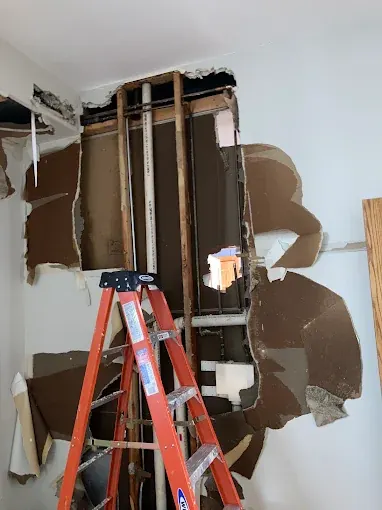
The hardest part of most installations isn't the new pipe — it's connecting it correctly to what's already there. We locate existing stacks and laterals, verify their condition before adding load to them, use the right transition fittings between PVC and cast iron or clay, and maintain slope through the connection. If the pipe you're tying into is compromised, better to learn that on camera during planning than after the new bathroom is tiled.
Below the level of your main sewer line, gravity needs help. We install sewage ejector systems for basement bathrooms and laundry rooms — sealed basins, properly sized pumps, check valves and vents — and floor drain systems that route water to sump pits or daylight. Done right, a finished basement drains as reliably as any floor above it; done wrong, it floods. If you're dealing with water down there now, see our basement standing water service.
Restaurants, salons, laundromats and light industrial spaces have drain requirements homes don't: grease interceptors sized to code, hair traps, hub drains for equipment, and floor drains with the flow capacity for wash-downs. We install and connect all of it, and can put the new lines on a maintenance schedule from day one so they never become the emergency that closes you for a night.
Drain installation pricing turns on run length, access (open framing vs. finished walls vs. concrete), and whether pumps or new venting are involved. After a site visit we give you one flat number per option, in writing. If we uncover something unexpected once walls are open, we stop, show you, and re-quote before proceeding — you're never billed for surprises you didn't approve.
Installation pricing has more variables than repair, so here's how to think about it. The pipe itself is the cheap part; labor and access are the cost. A new fixture drain in open basement framing is quick, inexpensive work. The same drain fed through finished walls and ceilings costs more because careful opening and closing costs more. Below-grade work adds the ejector system. Concrete adds cutting and patching. Permits and inspections add a known municipal fee. We walk the exact path of the new line during the estimate, price each real component, and hand you one flat number per option — including a value-engineered alternative when a smarter routing can save you real money without compromising the system.
The difference between a drain that works and a drain that works for fifty years is invisible on day one: hangers at correct intervals so pipe never sags into bellies, fittings that sweep with the flow rather than fighting it, cleanouts placed where a future technician can actually use them, venting that keeps traps sealed through every simultaneous-use scenario a busy household produces. We install to that standard because we're also the company that gets called when the other kind of installation fails — we've camera-inspected enough five-year-old "renovations" to know exactly which shortcuts create which problems. Our installations are documented, photographed before closing, and warrantied in writing.
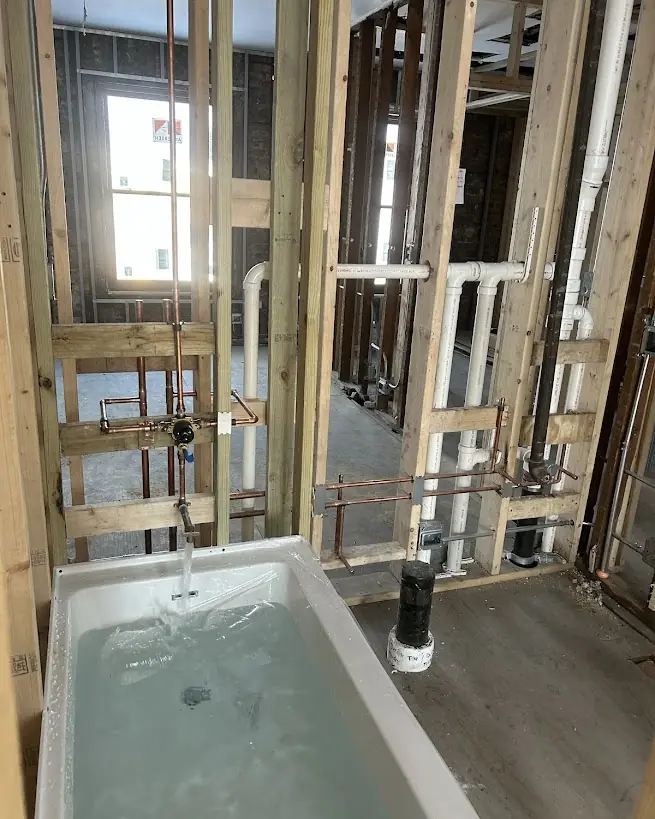
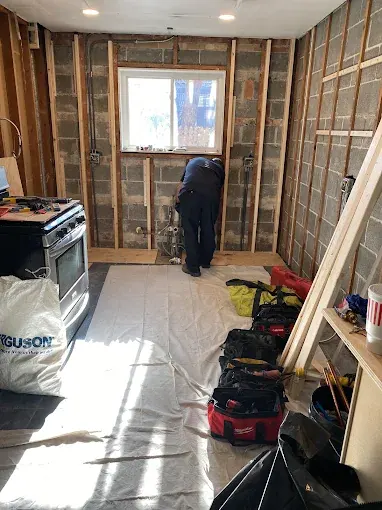
The requests we hear weekly, so you know you're in familiar company: adding a wet bar or coffee-station drain in a finished basement; roughing in a full bath for an in-law suite; relocating kitchen drains during an island remodel; adding a proper laundry standpipe where a washer has been draining into a slop sink for decades; installing garage floor drains before an epoxy-floor project; and adding exterior cleanouts to older homes that never had them. Each has its own code details — trap arm limits, venting rules, ejector requirements below grade — and each goes smoothly when planned with the drain layout first rather than squeezed in after the cabinets are ordered. Bring us in at the design stage, even just for an hour's consult, and the plumbing will never be the part of the remodel you remember.
We install and replace drains statewide — every county, North to South. Northern NJ installation work leans toward brownstone and two-family renovations in Hudson and Essex, basement bathroom additions across Bergen and Morris, and bringing pre-war homes up to modern code. Central Jersey keeps us busy with remodel-driven installations through Middlesex, Somerset, Monmouth and Mercer's active renovation market. In South Jersey and along the shore — Camden, Burlington, Gloucester, Atlantic, Ocean, Cape May — we handle everything from new-construction rough-ins to raising shore-home drainage above flood-driven realities. All 21 counties, permitted and inspected to each municipality's requirements. Popular service areas:
Most drain installation and replacement work requires a plumbing permit and inspection under the New Jersey Uniform Construction Code. We handle permits and inspections as part of the job.
Yes — with a sewage ejector system if the fixtures sit below your sewer line. We rough in the drains, install the pit and pump, and vent it all to code.
If they're original, almost certainly. Galvanized waste lines rust closed from the inside and no cleaning restores them. Replacement with PVC ends the recurring-clog cycle permanently.
A single fixture drain in open framing can be done in hours; a basement bathroom rough-in typically takes 1–2 days; whole-line replacements depend on length and access. Your quote includes the schedule.
Schedule 40 PVC for nearly all drain, waste and vent work — smooth, corrosion-proof and code-approved — with proper transition fittings wherever it meets existing cast iron, copper or clay.
Yes, and it's one of the best small upgrades you can make. An accessible cleanout makes every future drain service faster and cheaper and often pays for itself the first time the line needs clearing.
Flat-rate pricing • 30–90 minute response • Pay only when your clog's gone
Pay only when your clog's gone. 30–90 minute response anywhere in New Jersey.
Thanks! Our team will update you within the hour. For emergencies call 973-355-0890 now.