When a sewer lateral is past repair — collapsed, channeled, or failing along its whole length — we replace it with modern PVC, permitted and inspected, anywhere in New Jersey. Call 973-355-0890 for a camera-verified flat quote.
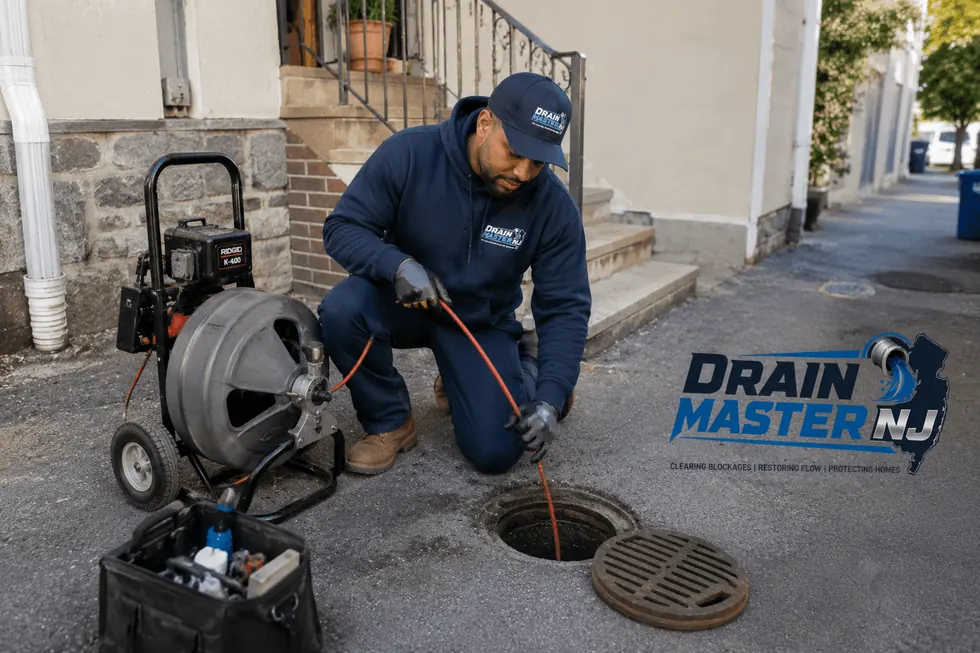
Spot repair is the right call for isolated damage — we say so on our sewer repair page and we mean it. Replacement becomes the smarter investment when the camera shows failure along the run: clay pipe with root intrusion at joint after joint, cast iron whose bottom channel has rusted away, Orangeburg deforming under load, or multiple bellies from decades of settling. Patching a systemically failed line means paying for excavation again every few years. One replacement resets the clock for 50+ years.
New Jersey homes carry every generation of sewer material. Vitrified clay (common pre-1975) is durable but jointed every few feet — each joint a door for roots. Cast iron corrodes internally until the invert channels through. Orangeburg, a tar-impregnated fiber pipe used when metal was scarce, softens and ovals until it collapses; if your home was built in the 1950s–60s and the lateral has never been replaced, it deserves a camera look on general principle. We replace all of them with SDR-35 or schedule 40 PVC — smooth-bore, gasketed, root-resistant and code-approved.
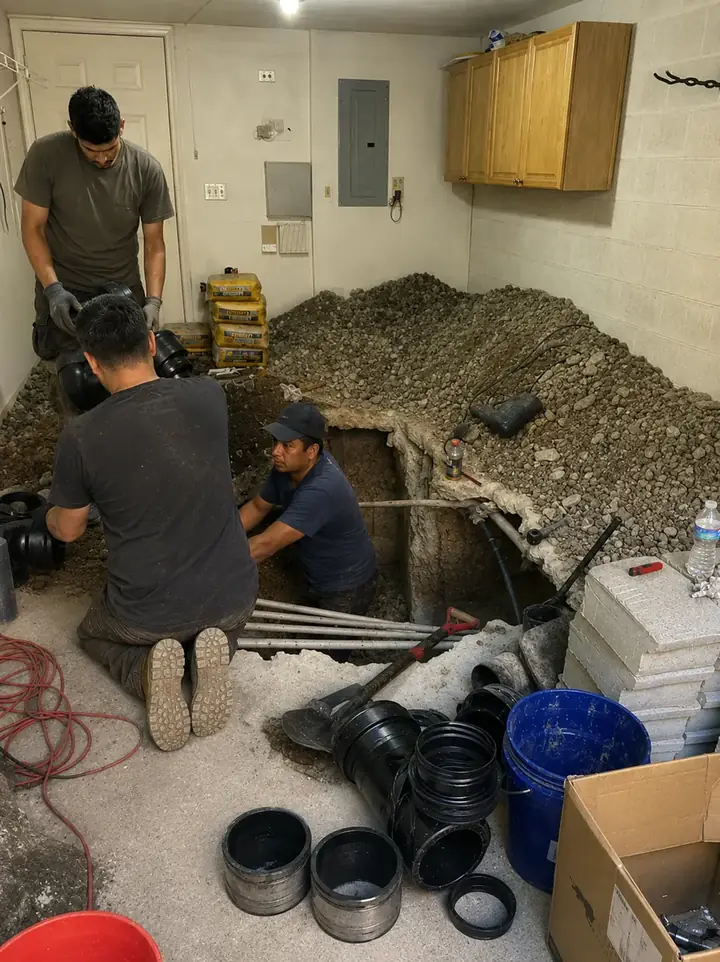
First, camera inspection and surface locating map the existing line's exact path and depth. We mark utilities, pull the municipal permit, and excavate along the run — or, where conditions allow, use trenchless pipe bursting to pull new pipe through the old path with only two access pits. New pipe is laid on stone bedding at proper slope, connections are made at the house and at the main or curb trap, the town inspects the open trench, and we backfill in compacted lifts so the surface doesn't settle. Most residential replacements finish in 1–3 days.
Beyond replacement, we install first-time sewer connections: new construction laterals, septic-to-sewer conversions where municipal service has reached your street, and additional connections for accessory dwellings and detached structures. Septic conversions in particular involve coordination we handle end to end — connection fees, decommissioning the tank to code, and grading the new run for gravity flow (or installing a grinder pump where the street main runs higher than the house).
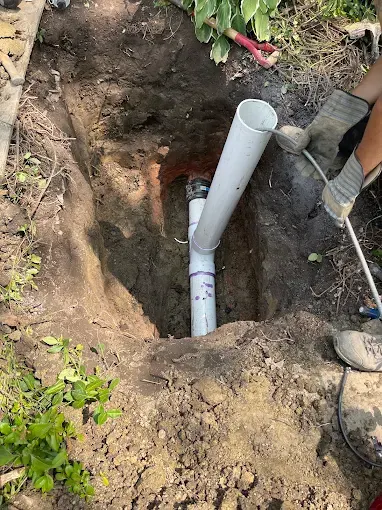
Replacement is real construction, and how a crew treats your property shows in the aftermath. We photograph pre-existing conditions, protect lawn areas with plywood tracking, cut and preserve sod where practical, saw-cut concrete cleanly rather than smashing it, and compact backfill properly — the single biggest factor in whether your yard has a sunken stripe in it next spring. Restoration expectations are written into the quote, not left to assumption.
Every sewer replacement in New Jersey requires a permit, and work at the property line or street may involve the municipal utility authority, road-opening permits and bonds. Rules differ town to town — some municipalities own the lower lateral, most don't. We've worked across all 21 counties and handle the local requirements as part of the job, so the first time you think about paperwork is when we hand you the approved final inspection.
The honest answer: it depends on length, depth, surface (lawn vs. driveway vs. street), and municipal fees — which is exactly why we don't quote from the phone. We camera the line, show you the footage, and price replacement alongside any viable repair or trenchless alternative in one written flat quote. Financing options are available for larger projects; ask when we visit.
A full lateral replacement is one of the larger single repairs a home ever needs, so the budget deserves straight talk. The primary cost drivers: total run length from foundation to connection point, working depth along that run, what sits on the surface (lawn, driveway, walkways, street), and your municipality's permit, inspection and connection requirements. Trenchless pipe bursting shifts the math where it's viable — higher equipment cost, dramatically lower restoration cost. We quote the complete project flat: excavation or bursting, pipe and bedding, connections at both ends, inspections, backfill, and stated restoration — with financing available. What you'll never see is a low headline number that grows once the trench is open; if the ground genuinely surprises us, work stops until you've approved a revised plan.
We treat replacement as the last time anyone should ever think about this pipe. That means bedding stone graded so the line holds slope for decades, gasketed joints assembled to spec, compaction in lifts so your yard doesn't develop a trench-shaped valley in two years, and a final camera pass recorded from house to main. You receive the footage, the permit sign-offs and our warranty in one packet — documentation that answers every future home inspector's sewer question before it's asked. Across New Jersey's 21 counties, that packet has smoothed more than a few closings.
Here's what the week actually looks like. Before work: utility mark-outs, permits filed, and a walkthrough confirming access, protection and what restoration is included. Day one: excavation or bursting-pit digging, with water service normal and drains usable most of the day — we coordinate the brief connection windows with you. Main work: old line out or burst, new line in on graded bedding, connections made at house and main. Inspection: the town views the open trench or completed work; we schedule this tightly so nothing sits open longer than necessary. Final day: backfill in compacted lifts, surface restoration, and a recorded camera pass through your new lateral. Total drain downtime is typically hours, not days, and we brief you each morning on exactly what's happening. Predictability is part of the service.
Full sewer replacements are performed across every New Jersey county, adapted to each region's ground truth. In the urban north — Hudson, Essex, Bergen, Passaic, Union — that means tight-access excavation, street-opening coordination and century-old connection points. Through Central Jersey's Middlesex, Somerset, Monmouth and Mercer, longer suburban runs and mature root systems shape the work. In South Jersey and the shore counties — Camden, Burlington, Gloucester, Ocean, Atlantic, Cape May — high water tables and sandy trenching call for different shoring and bedding technique entirely. Twenty-one counties, one standard: permitted, inspected, camera-documented replacements that outlast the mortgage. Popular service areas:
Most residential laterals are replaced in one to three days, including excavation, inspection and backfill. Trenchless pipe bursting can shorten that further where conditions allow.
You'll see it on video — channeled cast iron, collapsing Orangeburg, or root intrusion at every joint. If the footage shows isolated damage instead, we'll recommend the cheaper spot repair ourselves.
It's a bituminized wood-fiber pipe used widely in the 1940s–60s when metal was rationed. It softens, ovals and collapses with age — there is no repairing it, only replacing it, ideally before it fails completely.
Open-trench replacement disturbs a strip along the pipe path, which we restore with compacted backfill and preserved sod where possible. Pipe bursting needs only two pits and leaves everything between untouched.
If municipal sewer has reached your street, usually yes. We handle the connection permit, new lateral, and code-compliant decommissioning of the old tank as a single project.
Properly bedded PVC laterals are rated for 50–100 years, are immune to corrosion, and give roots essentially no joints to exploit — for most homeowners it's the last sewer line they'll ever buy.
Flat-rate pricing • 30–90 minute response • Pay only when your clog's gone
Pay only when your clog's gone. 30–90 minute response anywhere in New Jersey.
Thanks! Our team will update you within the hour. For emergencies call 973-355-0890 now.