How roots get in, what they do, what cutting/jetting/repair each cost, and how to decide between maintenance and replacement.
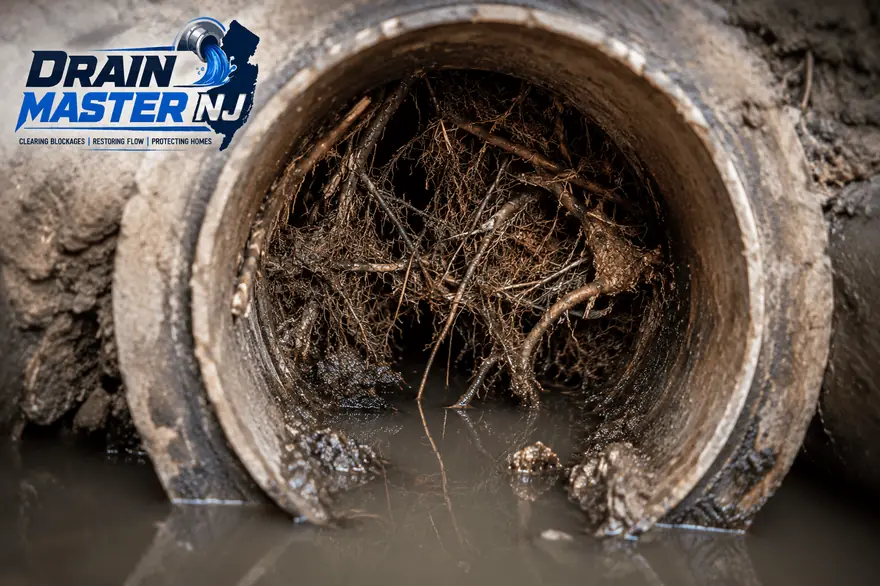
Roots don't smash pipes — they follow moisture vapor to joints and hairline cracks, enter thinner than a hair, and thicken with every season of warm nutrient-rich flow. Clay laterals, jointed every few feet, are the ideal target, which is why root intrusion dominates in the pre-1975 neighborhoods that make up so much of Bergen, Essex, Morris and Union counties.
Stage one: fine roots catch paper occasionally — you notice nothing. Stage two: the net thickens; drains slow, toilets gurgle, and the first backup arrives, typically cleared in an hour and forgotten. Stage three: annual backups as regrowth cycles. Stage four: the root mass wedges the joint apart and a maintenance problem becomes a structural one. The economics of intervention improve the earlier you act.
Maintenance cutting (typically annual): shears roots at the wall, restores flow same-day, sustainable for decades on many lines. Cutting + root-cutting hydro jet: strips fines off the wall, extends the regrowth cycle. Foaming herbicide treatment after cutting: slows regrowth further. Spot repair ($1,500–$5,000+): excavate and replace the compromised joints only. Lining or full replacement ($4,000–$25,000): the permanent answer for widely compromised pipe. The camera footage — not a salesperson's urgency — should choose among these.
One or two intruded joints, pipe otherwise sound: maintain, cheaply, indefinitely. Multiple joints, recurring backups faster than annually, or visible structural deflection: price the repair, because maintenance costs are about to compound. Either way, get the footage and keep it — it's your baseline for every future decision and your evidence at sale time.
Skip the research — get a flat-rate answer for your exact drain in one call
Pay only when your clog's gone. 30–90 minute response anywhere in New Jersey.
Thanks! Our team will update you within the hour. For emergencies call 973-355-0890 now.